How Certain Warm Drinks Help the Body Wind Down in the Evening
Evenings often carry a quiet tension that’s easy to overlook. The day may be technically over, but the body doesn’t always recognize that immediately. Thoughts linger, muscles remain slightly tense, digestion is still active, and the nervous system may still be operating as if more demands are coming. Many people assume winding down should happen…
Evenings often carry a quiet tension that’s easy to overlook. The day may be technically over, but the body doesn’t always recognize that immediately.
Thoughts linger, muscles remain slightly tense, digestion is still active, and the nervous system may still be operating as if more demands are coming. Many people assume winding down should happen automatically once tasks are finished, yet the body often needs gentle signals to shift from alert mode into rest.
This is where warm drinks can play a surprisingly supportive role. Not as a cure for sleep issues, and not as a ritual you must follow perfectly, but as a subtle cue that helps the body transition into a calmer state.
Warm drinks work through temperature, rhythm, digestion, and familiarity. When used intentionally and without pressure, they can help evenings feel slower, safer, and more settled.
Why the Body Needs Help Transitioning at Night
The nervous system doesn’t switch off on command. Throughout the day, it responds to stimulation, decision-making, noise, screens, movement, and emotional input.
Even after activity stops, stress hormones can remain elevated, especially if the day was mentally demanding. This is why lying down doesn’t always lead to rest, even when you’re tired.
Winding down is a process, not a moment. The body benefits from repeated signals that activity is ending and recovery is beginning. These signals don’t need to be dramatic.
In fact, subtle, familiar cues tend to work better than strict routines. Warm drinks are one of those cues. They don’t force relaxation, but they invite it.
How Warmth Signals Safety to the Nervous System
Warmth has a direct calming effect on the body. It encourages blood vessels to relax, supports circulation, and reduces muscle tension. When warmth is internal, through a drink rather than an external heat source, it also interacts with digestion and breathing.
Sipping a warm drink encourages slower, deeper breaths. This naturally activates the parasympathetic nervous system, the branch responsible for rest and recovery. Unlike cold drinks, which can be stimulating or jarring, warm drinks tend to soften the body’s response.
This effect isn’t dramatic, but it’s consistent. Over time, the body begins to associate warmth in the evening with safety and slowing down.
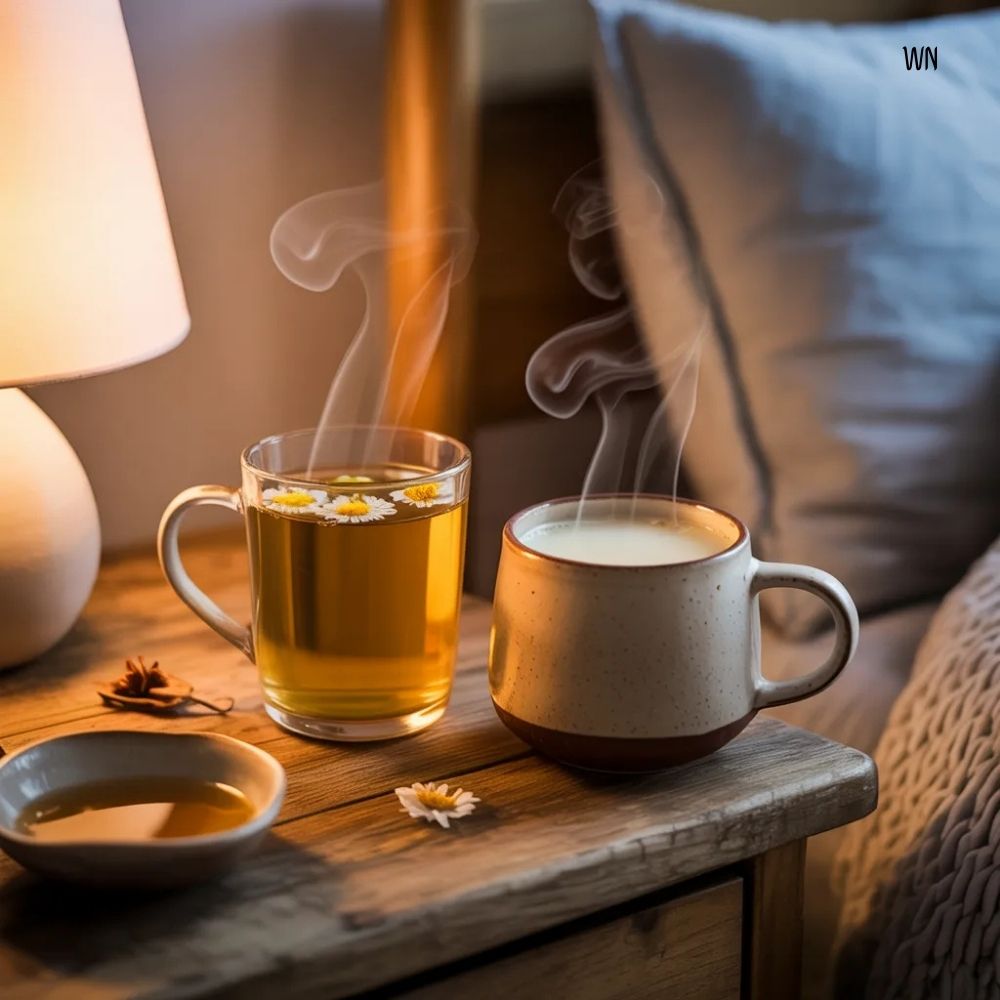
Warm Drinks Encourage Slower Pace and Presence
One of the overlooked benefits of warm drinks is the way they change behavior. You can’t gulp a hot drink the way you might a cold one. You sip. You pause. You wait. This slower rhythm matters more than it seems.
Evening stress is often maintained by momentum. When you slow one action, other processes follow. A warm drink creates a natural pause point in the evening. It’s a moment where you’re no longer producing, responding, or deciding. You’re simply consuming something gently.
This pause gives the nervous system time to recalibrate, especially when evenings otherwise blur into screens or tasks.
Herbal Teas and Gentle Nervous System Support
Herbal teas are often associated with relaxation, not because they sedate the body, but because they work gently with it. Many herbs used in evening teas, such as chamomile, lemon balm, rooibos, or peppermint, have mild properties that support digestion or calm without stimulation.
The real benefit, however, comes from consistency rather than chemistry. When you drink the same type of tea in the evening regularly, the body begins to associate that flavor and warmth with the end of the day. This learned association can be as powerful as the ingredients themselves.
Herbal teas are especially helpful because they are caffeine-free, allowing the body to wind down without conflicting signals.
Warm Milk and Its Comforting Effect
Warm milk has long been associated with bedtime, and while it doesn’t act as a sleep aid, it offers a combination of warmth, nourishment, and familiarity. Milk contains protein, carbohydrates, and minerals that support gentle satiety and stable blood sugar overnight.
For some people, evening hunger or low blood sugar contributes to restlessness. A warm drink that provides mild nourishment can help the body feel settled enough to rest. The warmth also supports relaxation and digestion.
This doesn’t mean everyone should drink milk at night, but for those who tolerate it well, it can be grounding rather than stimulating.
Light Broths as Evening Support
Warm broths are often overlooked as evening drinks, yet they offer hydration, warmth, and electrolytes without heaviness. Broth can be particularly helpful on days when dinner was early, light, or irregular.
The sodium content supports hydration, while the warmth supports relaxation. Broth also signals nourishment without triggering digestive effort late at night. This can be especially helpful when the body feels tired but unsettled.
Sipping broth in the evening can feel surprisingly calming, especially during colder months or after physically demanding days.

Why Sweetened Hot Drinks Can Be a Double-Edged Sword
Sweetened hot drinks, such as hot chocolate or sweetened teas, can feel comforting emotionally, but their effect depends on timing and amount. A small amount of sweetness can support relaxation by stabilizing blood sugar, especially if the body is slightly under-fueled.
However, large amounts of sugar late at night may lead to energy fluctuations that disrupt rest. This doesn’t mean sweet drinks are forbidden. It means awareness matters.
When sweet warm drinks are enjoyed in moderation and earlier in the evening, they can feel grounding rather than stimulating.
Warm Drinks as Psychological Signals
Beyond physical effects, warm drinks act as psychological markers. They signal the end of productivity and the beginning of care. When evenings lack boundaries, the mind may stay in “on” mode, scanning for tasks or concerns.
A warm drink can become a boundary. It marks a shift from doing to being. Over time, this signal becomes stronger, helping the body anticipate rest rather than resist it.
This effect works best when the drink is associated with calm activities rather than screens or work.
Why Consistency Matters More Than Choice
People often search for the “best” evening drink, but consistency matters more than ingredients. Drinking the same warm beverage most evenings trains the nervous system to respond.
Whether it’s herbal tea, warm milk, or broth, repetition builds familiarity. Familiarity builds safety. Safety supports rest. Switching drinks occasionally is fine, but having a default option helps the body recognize the pattern.
When Warm Drinks May Not Feel Helpful
Not everyone finds warm drinks soothing. Some people feel overly full or uncomfortable drinking close to bedtime. In these cases, timing matters more than avoidance.
Drinking warm beverages earlier in the evening allows benefits without interfering with sleep. Listening to how your body responds is more important than following a rule. Support should feel supportive, not forced.
Final Thoughts
Certain warm drinks help the body wind down in the evening not because they contain magic ingredients, but because they provide warmth, rhythm, and familiarity. They support digestion, signal safety to the nervous system, and encourage a slower pace at the end of the day.
We encourage you to think of warm drinks as gentle invitations rather than tools. When evenings include small, repeated cues that it’s safe to rest, the body often responds with calm over time.
Rest doesn’t need to be forced. Sometimes, it just needs permission, offered quietly through something as simple as a warm cup held in your hands.