Walking vs Running: Which One Actually Supports Long-Term Health Better
Few fitness topics spark as much quiet comparison as walking versus running. One is often seen as gentle and accessible, the other as efficient and intense. Over time, these labels have turned into assumptions about which one “counts” more for health. Many people feel they should be running to truly take care of themselves, even…
Few fitness topics spark as much quiet comparison as walking versus running. One is often seen as gentle and accessible, the other as efficient and intense.
Over time, these labels have turned into assumptions about which one “counts” more for health. Many people feel they should be running to truly take care of themselves, even when walking feels more sustainable or enjoyable.
We want to step away from that framing and look at the question through a long-term health lens. The goal is to understand how each form of movement supports the body over years, not weeks. When health is measured over decades rather than workouts, the answer becomes more nuanced and often more reassuring.
Long-Term Health Is Built on What You Can Maintain
When we talk about long-term health, consistency matters more than intensity. The body benefits most from movement that happens regularly, not sporadically.
This is where walking quietly stands out. Walking is accessible, low-impact, and easier to maintain through different life stages, schedules, and physical conditions.
Running, while highly effective for cardiovascular conditioning, demands more from joints, muscles, and recovery systems.
Many people can run comfortably for a period of their lives, but fewer maintain it consistently over decades without interruption due to injury, time constraints, or changing energy levels. Walking, on the other hand, tends to remain available even as life changes.
From a long-term perspective, movement you return to again and again is often more protective than movement you push through for a season.
Cardiovascular Health Depends on Regular Stimulation, Not Maximum Effort
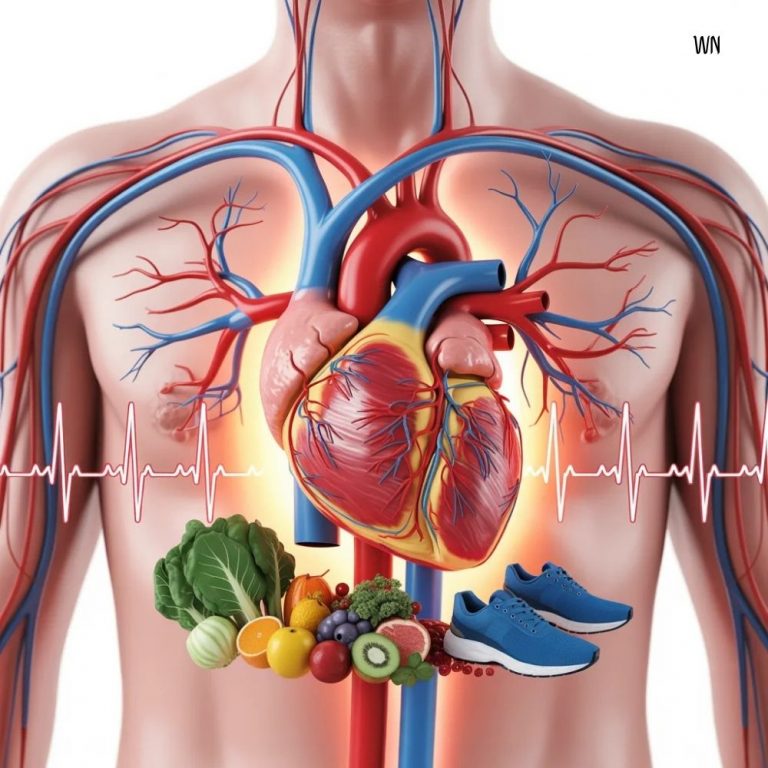
Running undeniably raises heart rate more quickly and intensely, which can improve cardiovascular fitness efficiently. For people who enjoy it and recover well, running can be a powerful tool. However, heart health doesn’t require maximal effort to improve or be maintained.
Walking, especially at a brisk pace, still provides meaningful cardiovascular stimulation. When done regularly, it supports circulation, blood pressure regulation, and metabolic health. Over time, the cumulative effect of frequent walking can rival or even surpass the benefits of less frequent high-intensity exercise.
What matters most is not how high your heart rate spikes, but how often your heart is gently challenged in a way your body can recover from comfortably.

Joint Health and Injury Risk Shape Long-Term Outcomes
One of the biggest differences between walking and running shows up in joint impact. Running places repeated force through the ankles, knees, hips, and lower back. For some bodies, this is tolerated well. For others, especially over time, it increases the risk of overuse injuries that interrupt activity altogether.
Walking places significantly less stress on joints while still engaging the muscles that support them. This lower impact allows many people to move more frequently without needing extended recovery. Over the long term, fewer interruptions often mean more total movement, which benefits overall health.
Injury prevention is not about avoiding effort, but about choosing movement that keeps you active year after year.
Hormonal and Stress Responses Matter More Than We Think
Exercise affects more than muscles and the heart. It also influences stress hormones and nervous system balance. Running can be energizing and mood-boosting, but it can also increase stress hormones if done too intensely or too often without adequate recovery.
Walking tends to have a calming effect on the nervous system. It supports stress reduction while still improving physical health, making it especially valuable during busy or emotionally demanding periods of life.
Over time, this balance between movement and recovery supports mental as well as physical well-being. Long-term health includes how well your body handles stress, not just how fit it appears.
Aging Changes the Equation
As we age, recovery becomes more important. Muscles repair more slowly, joints may become less resilient, and energy levels fluctuate. Movement that once felt effortless can start to feel demanding.
Walking adapts well to these changes. It can be adjusted in pace, duration, terrain, and frequency without losing its benefits.
Running can still be part of a healthy routine for some older adults, but it often requires more careful management to avoid injury or burnout. Movement that evolves with your body is more likely to support health over a lifetime.
Walking and Running Can Both Support Health, But Not Equally for Everyone
Running is not harmful, and walking is not inferior. Each has value. The key difference lies in how well each fits into your life, body, and long-term reality. For some, a mix of both works well. For others, walking alone provides nearly all the benefits they need.
Health does not come from choosing the most demanding option. It comes from choosing the option you can sustain with care, consistency, and respect for your body’s signals.
There is a persistent idea that walking is only a starting point, something you graduate from once you’re “fit enough.” In reality, walking can be a lifelong foundation for health. It supports heart health, mobility, mental clarity, and stress regulation without requiring recovery days or specialized equipment.
Running can add intensity and challenge, but it is not a requirement for long-term health. For many people, walking regularly does more for their overall well-being than running inconsistently.
Final Thoughts
When asking whether walking or running supports long-term health better, the most honest answer is the one that fits your life and body best.
Walking offers accessibility, sustainability, and protection against injury, which makes it a powerful tool for lifelong health. Running offers efficiency and cardiovascular challenge, but only when balanced carefully with recovery.
We encourage you to measure health not by intensity, but by consistency. The movement that supports you year after year, adapts as you age, and feels manageable in real life is the one that truly protects long-term health.